An Succession Certificate in India for NRIs is a formal legal document issued by Indian courts specifically for non-resident Indians (NRIs) who are lawful heirs of an individual that has passed away without leaving a valid will and has outstanding debts and securities. In cases where a person dies without a legally recognized will, they are deemed to have died intestate. The primary purpose of an NRI Succession Certificate is to grant authorization to its holders, typically NRIs, allowing them to settle the deceased individual’s outstanding debts and effectuate the transfer of securities without the requirement to establish the legal heir entitled to these assets.
Succession Certificates in India for NRIs play a crucial role in safeguarding the interests of both individuals and organizations involved in transactions linked to the deceased’s debts and securities. These certificates provide a vital layer of protection to all parties by ensuring that any payments made or transactions conducted in good faith with the certificate holder are regarded as valid and legally binding. Given the legal security and assurance they offer, it is common practice for individuals and entities to request NRI Succession Certificates before finalizing the resolution of the deceased person’s debts and securities in favor of the party making such claims.
Understanding Property Ownership Transfer in India: Intestate and Testamentary Succession Explained
In India, the transfer of property ownership can occur through two distinct channels: voluntary transfer or involuntary transfer. The legal framework for these processes is governed by the Indian Succession Act. But what exactly do we mean by “intestate” and “testamentary” succession within this context?
Succession Certificate in India for NRIs plays a pivotal role in property inheritance. Intestate succession comes into play when an individual passes away without leaving a valid will, rendering them intestate. In such cases, the distribution of their property to their rightful heirs is determined by the rules of intestate succession.
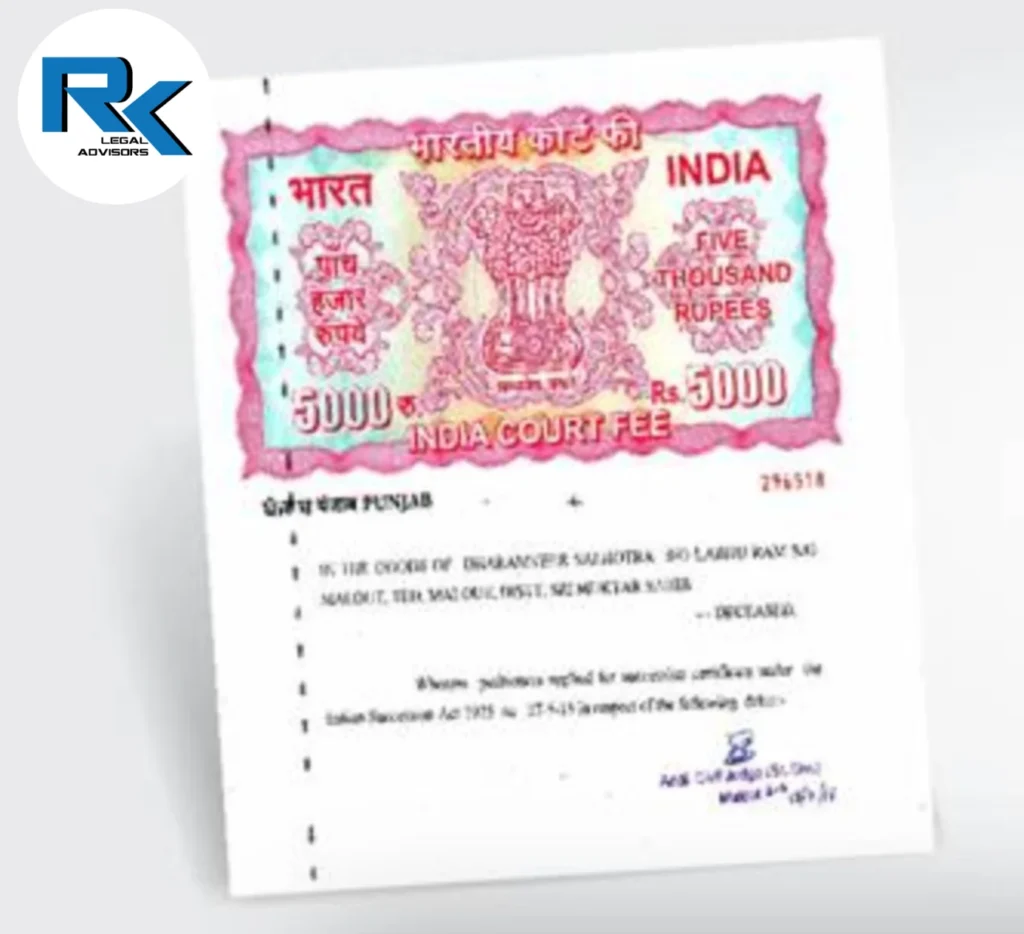
This legal mechanism ensures that property is allocated according to predefined guidelines, in the absence of specific testamentary instructions.
On the other hand, testamentary succession is applicable when a deceased person has left behind a legally recognized will. In this scenario, the disposition of their property occurs in strict accordance with their expressed wishes as outlined in the will document. The testamentary succession process ensures that the deceased’s intentions are upheld, and the property is transferred to the designated beneficiaries.
In summary, whether through voluntary or involuntary means, the Succession Certificate in India for NRIs plays a crucial role in facilitating property transfers, especially in cases of intestate succession where no will exists, and testamentary succession where a legally valid will guides the distribution process.
Indian Succession Act.
The Indian Succession Act lays down a uniform and complete system which includes succession and inheritance. Succession Laws in India are diverse and they depend upon personal laws and the nature of the Assets, therefore to deal with such complexities a uniform law namely the Indian Succession Act, of 1925 was incorporated in India. The Law of succession in India deals with principles related to the disposition of the property of a deceased person.
During British rule, the succession/ inheritance of property was influenced by Personal laws but in the current era the matters related to inheritance law, and the right to property in Indian Succession Law require a holistic approach. In a case where a deceased leaves a will behind, the disposition of property won’t attract many complexities, but where a person dies without making a will the heirs of the property will need an inheritance certificate. This document is very important because it gives a person the authority to represent the deceased to collect debts and securities that are payable in his name. Under the Indian Succession Act, such an inheritance certificate is called a succession certificate.
Warisan Certificate in India
A property is devolved from one person to another upon the death of the owner and such devolution is called inheritance/succession, and upon whom such property is devolved is called a legal heir. A legal heir is entitled to enjoy the assets of the deceased as prescribed by the Inheritance law in India. For the purpose of partition and distribution of the immovable property, a legal heir can claim a deceased property either through a will made by the deceased or by obtaining a Warisan Certificate in India. A death certificate is required to obtain this legal heir certificate. This certificate is obtained from Taluk/tehsildar or district civil court of competent jurisdiction. A statement from a government employee who is familiar with the deceased should be included in the application form.
A Warisan Certificate in India is a legal heir certificate which is an essential document that establishes a relationship of the legal heir with the deceased, it helps the members to claim the assets such as insurance, gratuity, pension, etc. of the deceased as per the property inheritance law in India. A legal heir certificate is different from a succession certificate because it is a document used by the heirs for the transfer of property, telephone connection, electricity connection, filing of IT returns, paying or collecting of debts or security on behalf of a deceased person, etc. As per section 370 of the Succession Act when a person has left behind a valid will then there is no need for Succession Certificate in such a case.
Procedure To Obtain A Succession Certificate in India
If a legal heir wants to obtain a succession certificate in India, the heir should file a petition/application in the civil court under whose jurisdiction the property of the deceased is situated. The petition/application should be accompanied by authentic documents. What are the Succession Certificate Documents required? The documents required for obtaining a Succession Certificate are as follows:
- Original Death Certificate of the deceased
- Time and Place of the Death
- Name of all the legal Heirs and their relationship with the deceased person.
To obtain a succession certificate in India, the procedure is initiated with an application/petition in the Civil Court. It should be made by:
- a person of sound mind,
- A person who has attained the age of majority,
- A person who has an interest in the property of the deceased. For example, a widow of the deceased or a person with a beneficial interest in the debt
- A minor through its legal guardian.
Documents Required For Succession Certificate in India
The petition along with the succession certificate documents required should be filed in the court with competent jurisdiction. In the petition details such as:
- Name of petitioner,
- Name of legal heirs of deceased,
- Residence of relatives and family of deceased,
- Details of death
- Debts and securities for which a succession certificate has to be obtained should be also be mentioned.
After the succession certificate procedure is initiated, the court will issue a notice for 45 days in a newspaper and if a person has an objection he can file it in the court, but if the court doesn’t receive any objection the court shall issue the Succession certificate. The process usually takes 5 to 7 months as per the Succession Law.
When an NRI person wants to inherit a property in Indian upon realizing that some property belongs to him and the owner has died intestate, then NRI has to follow the same procedure as the resident of India.
Validity of Succession Certificate in India
This certificate is valid throughout India. When a person leaves behind a will the requirement of a succession certificate becomes unnecessary but if a person dies intestate or without a will then the requirement of a Succession Certificate in India becomes mandatory. This certificate is needed when a person inherits any moveable property or immovable property under various property laws in India, and if the certificate is issued in a foreign country by an Indian representative, it becomes valid if it is stamped in accordance with the Court Fees Act, 1870. A Succession Certificate in India can be revoked if it is obtained fraudulently, a procedure to obtain the certificate was defective.
Situations Where You Need a Succession Certificate
If there is no will or nomination, the heirs of the deceased must prove their claim to the financial assets of the deceased.
A) In such cases, the bank may request the heirs to provide a succession certificate for a bank account. For example, if the deceased individual, A, has a bank account with XYZ bank but the account does not have a nominee, and A is survived by his wife, in this scenario, the bank can ask the widow to produce a succession certificate for the bank account to claim A’s financial asset. However, in the case of a nominee account, such a requirement is not necessary.
B) You also need a succession certificate to have the shares transferred in the name of the legal heir. For example, if a shareholder holds shares of ABC company solely in their name and dies without leaving a will, then the legal heir of the deceased should obtain a succession certificate for the shares and submit a copy of it to the ABC company’s office.